


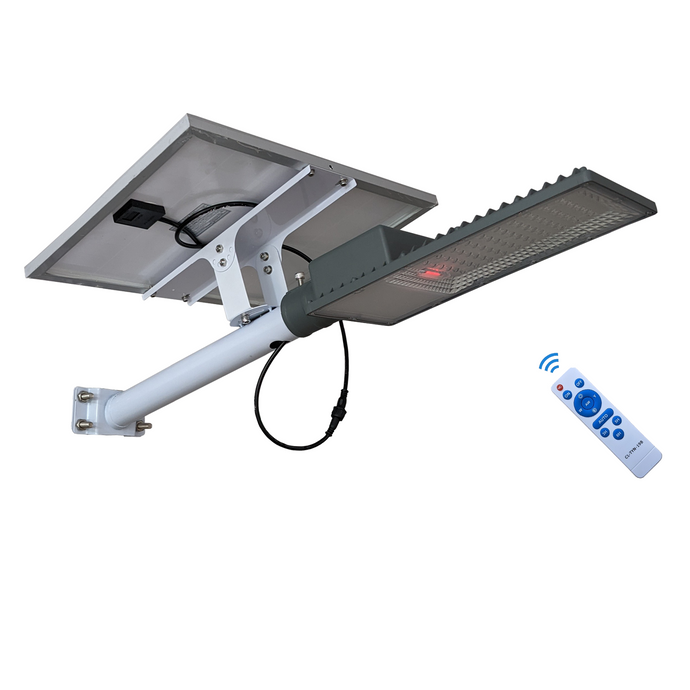

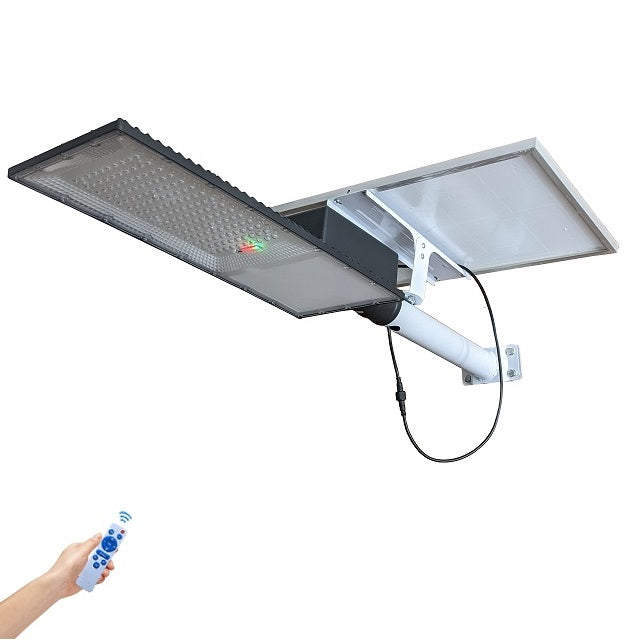


Solar Street Lights — All-in-One & Integrated, Built for India
Looking for the best, most reliable solar street light for your home gate, residential layout, commercial road, or industrial project? Tapetum offers high-performance, automatic solar street lights engineered specifically to withstand diverse Indian weather conditions. Our premium commercial-grade range includes compact All-in-One and flexible Semi-Integrated models equipped with intelligent motion sensors and long-lasting, heavy-duty LiFePO4 batteries.
Every lighting fixture operates entirely on its own from dusk to dawn, requires zero external electrical wiring, and runs on 100% free solar electricity—fully backed by an official product warranty and professional after-sales technical support. Review our verified technical breakdowns and see our updated solar street light price list below.

Solar Street Light Price List & Warranty Structure (India)
Prices listed below represent complete, ready-to-install lighting fixture kits and integrated accessories (excluding mounting poles), inclusive of all operational expenses. Total commercial solar street light price configurations start from ₹4,499.
All-in-One Solar Street Light Range
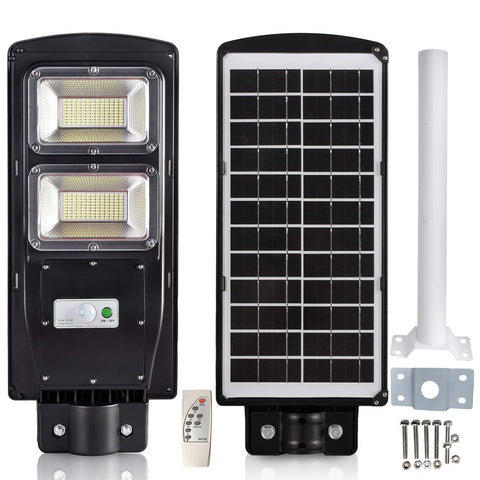
A sleek, space-saving architectural design where the solar panel, lithium battery, smart circuit controller, and LED luminary are integrated into a single weather-sealed casing.
| Model Spec & Capacity | Price (₹) | Warranty |
|---|---|---|
| Solar Owl Street Light — 100 Watt Standard | 4,499 | 1 Year Comprehensive |
Semi-Integrated Solar Street Light Range
Engineered for installations requiring flexible orientation. The high-capacity battery, fixture, luminary, and controller are molded together, while the independent solar panel mounts separately to catch maximum daytime sunlight.
| Model Spec & Capacity | Price (₹) | Warranty |
|---|---|---|
| Solar Bat Street Light — 40 Watt Heavy Duty | 6,999 | 1 Year Comprehensive |
| Solar Bat Street Light — 75 Watt Heavy Duty | 9,000 | 2 Year Comprehensive |
| Solar Bat Street Light — 90 Watt Premium Pro | 11,500 | 2 Year Comprehensive |
| Solar Bat Street Light — 150 Watt Ultra Premium | 14,499 | 2 Year Comprehensive |
Types of Solar Street Lights Explained
1. All-in-One Solar Street Light — A compact, unified lighting architecture where the high-efficiency solar panel, battery cells, electronic controller, and LED array are housed inside a single streamlined protective unit.
2. Semi-Integrated Solar Street Light — In this architecture, the battery storage, outer fixture, LED luminary, and circuit board are cleanly molded into a single unit, while the commercial-grade solar panel is mounted separately on top of the pole, allowing for independent angle adjustments to capture optimal sunlight.

Core Features of Tapetum Commercial Solar Street Lights
- Fully Automatic Operation: Integrated high-sensitivity dusk-to-dawn sensors automatically activate the luminary at nightfall and shut it down at daybreak, eliminating manual flipping or management.
- Adaptive Smart Motion Sensors: Built-in infrared motion tracking registers local movement to raise lighting to 100% full brightness, serving as an active security light while conserving battery reserves when roads are empty.
- Maximum Energy Efficiency: Operating entirely on free renewable solar power, these stand-alone fixtures ensure uninterrupted area lighting even during severe grid power cuts and blackouts.
- Zero Long-Term Running Costs: Eliminates monthly electricity utility overhead bills completely, delivering an outstanding return on investment over the lifecycle of the system.
- Cabling-Free Infrastructure: Requires zero ground trenching, professional wire conduit installations, or expensive foundational electrical infrastructure—saving massive upfront labor costs.
- Low Maintenance Requirement: Once securely anchored and calibrated to the sun, the autonomous systems function smoothly without daily human supervision.
- Heavy-Duty Weatherproofing: Built with strict IP65-rated weatherproof seals to comfortably withstand intense summer heat, heavy tropical rain seasons, and airborne dust particles.
What are the essential parts of a solar street light?
A true commercial-grade solar street light consists of six major integrated components: a solar photovoltaic (SPV) module, a smart charge controller unit, a reliable battery storage cell, a high-lumen LED luminary, specialized weather-resistant interconnecting cables, and a heavy-duty mounting pole.
- Solar (SPV) Module: Positioned at the absolute peak of the pole at a calculated geographical angle to absorb maximum sunlight; it converts solar energy into electrical power throughout the day to recharge the system.
- Charge Controller Unit (CCU): The computational brain of the light that manages voltage currents, prevents destructive deep-discharging or dangerous overcharging, and extends overall battery life.
- Battery Cell: Safely stores converted daytime electrical energy for night illumination. Premium Lithium Iron Phosphate (LiFePO4) batteries are now the industry standard, offering a compact footprint and safely fitted directly inside the core luminary housing.
- Luminary: The high-output LED lamp array designed to provide crisp area illumination, expertly encasing the smart controller cards and lithium cells.
- Interconnecting Cables: Heavy-duty, UV-protected wires designed to maintain a seamless, weather-insulated power flow between the solar module, LED fixture, controller, and battery cells.
- Mounting Pole: A highly durable Mild Steel (MS) or Galvanized Iron (GI) pole structure designed to anchor the entire module assembly securely at a height of 4 to 5 meters against high winds.
Battery types used in solar street lights

Modern solar configurations rely on three primary battery types: traditional lead-acid, standard lithium-ion (Li-ion), and advanced lithium iron phosphate (LiFePO4). Premium LiFePO4 chemistry charges significantly faster, supports 4 to 5 times more deep discharge cycles than standard Li-ion, and vastly outlasts old lead-acid blocks while staying light and compact. Traditional lead-acid batteries are cheaper upfront but demand frequent water top-ups and have a short life. Tapetum uses 100% true-capacity Grade-A LiFePO4 batteries to guarantee maximum lifespans, zero manual maintenance, and to protect buyers from the fake specs common in cheap alternatives.
Light sources used in solar street lights
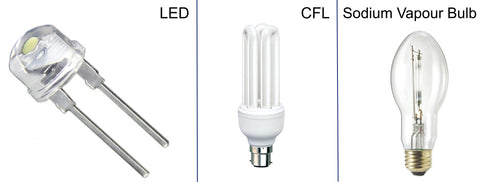
Historically, technical lighting setups utilized LED, compact fluorescent lamps (CFL), and high-pressure sodium-vapour sources. Today, industrial LED arrays have become the dominant choice because they provide dramatically higher lumen output and brightness at a fraction of the power consumption, paired with a massive operating lifespan and minimal heat dispersion.
Lighting fixtures and structural housings

Traditional industrial installations typically relied on bulky cobra-head style housings to cast light downward. Modern LED system designs are much lighter, more aesthetic, and highly architectural. Tapetum fixtures are manufactured utilizing durable, UV-stabilized ABS plastic and rust-proof aluminum casting to ensure long-term physical integrity.
Charge controllers explained: PWM vs MPPT

Solar charge controllers generally fall into two categories: Pulse Width Modulation (PWM) and Maximum Power Point Tracking (MPPT). A standard PWM controller matches panel voltage directly down to the battery's level, which limits overall solar efficiency. Conversely, an advanced MPPT controller continuously tracks and tracks optimal panel power curves to extract the highest possible wattage. While MPPT hardware commands a higher upfront cost, it produces significantly more energy from the same solar panel footprint, especially during overcast conditions.
Solar panel types: Mono-crystalline vs Poly-crystalline

Solar street light assemblies rely on two variants of solar panel cells: mono-crystalline or poly-crystalline. Mono-crystalline panels are crafted from single-crystal pure silicon, yielding maximum power conversion efficiency within a smaller area. Poly-crystalline panels are constructed from melted multiple silicon crystals, serving as a highly reliable, cost-effective, and widely implemented solution for standard solar projects.
MNRE compliance standards for solar street lights
The Ministry of New and Renewable Energy (MNRE) outlines benchmark models for White-LED solar street lighting configurations across India, varying by battery composition (lead-acid or advanced LiFePO4 cells) and operation metrics (full dusk-to-dawn brightness or motion-sensor adaptive dimming). MNRE standards mandate solar PV modules thoroughly tested to strict IEC 61215 / BIS 14286 certifications inside NABL- or IECQ-accredited testing laboratories, maintaining minimum driver efficiencies of 85–90%. As a premium product brand under Shinesun (pioneering solar innovation since 2017), Tapetum products ensure fully tested quality standards necessary for elite government bids and private commercial layout projects.
How to properly install a solar street light
Select a flat, level installation ground point situated completely away from tree lines, building shadows, or structural obstructions to ensure direct daytime sunlight access. A complete Tapetum setup kit includes the solar panel, lighting fixture, battery cell, and internal controller. Assemble and secure the LED module and solar panel onto the pole while it rests safely on the ground, adjusting the panel to the optimal geographic angle for your region. Carefully lift, plumb, and secure the pole onto its anchor foundation to ensure total resistance against heavy wind loads. Always adhere strictly to the manufacturer's anchoring blueprint.
Maintenance and care of solar street lights
Due to solid-state engineering, maintenance requirements remain minimal. To ensure peak charging performance, keep the face of the solar panel clean by gently wiping away seasonal dust layers or pollution film using a soft cloth, water, and mild soap—never use abrasive pads that could scratch the solar glass. Trim back overhanging tree branches that project shadows onto the cell surface over time, and visually audit the mounting bolts and housing seams periodically for any weather or wildlife disruptions. The heavy-duty IP65 casing and natural tilt angle allow normal rainwater to wash away everyday dust on its own.
Solar Street Lights — Frequently Asked Questions (FAQ)
How does the solar street light work?
Solar street lights work by converting sunlight into electrical energy via the photovoltaic effect during the day. This generated electricity passes through an intelligent charge controller and is safely stored inside an internal lithium battery cell. At nightfall, built-in optical sensors automatically trigger the battery to route power and illuminate the high-lumen LED lamp array smoothly until daybreak.
What is the purpose of solar street lights?
The primary purpose of solar street lights is to provide independent, zero-cost outdoor area illumination for public roads, highways, remote villages, corporate campus pathways, and residential villa gates. By operating entirely on free renewable solar power, they ensure uninterrupted night lighting during grid power cuts without requiring expensive underground electrical trenching or cabling infrastructure.
How long can a solar street light last?
A high-quality solar street light can last up to 25 years, depending on the individual component lifecycle. The commercial-grade solar panels perform reliably for 25+ years, while the high-output LED arrays carry structural ratings up to 50,000 active hours. Premium internal Lithium Iron Phosphate (LiFePO4) battery cells last 5 to 7 years before needing a replacement, easily outliving older lead-acid batteries which degrade within 2 to 3 years.
What are the disadvantages of solar street lights?
The main disadvantages are a higher upfront hardware cost and dependence on weather conditions. Initial purchase expenses are higher than traditional grid-tied lights, and extended weeks of thick monsoon cloud cover can temporarily reduce daytime battery charging rates. Additionally, the market suffers from cheap trading brands using fake battery specifications; however, purchasing from a verified manufacturer like Tapetum by Shinesun ensures true-capacity components and dedicated physical service support to solve these issues.
Which are better, LED or solar lights?
Solar street lights are better because they combine ultra-bright LED technology with independent, free solar power. This is a common buyer misunderstanding: solar lights and LED lights are not opposites, as every high-quality solar street light requires an LED array inside it. Traditional grid-connected LED lights are energy-efficient but still add to your monthly utility bills and fail during blackouts, whereas solar street lights offer 100% free, backup-proof lighting.
What are the two types of solar street lights?
The two types are All-in-One Solar Street Lights and Semi-Integrated Solar Street Lights. All-in-One models house the solar panel, battery cells, controller, and LED luminary inside a single, unified, compact outer casing. Semi-Integrated systems feature the battery and LED fixture grouped together in one sleek housing, while the solar panel is fixed independently on top of the pole to allow for flexible angle calibration toward the sun.
Can you replace the battery in solar lights?
Yes, you can easily replace the internal battery in solar street lights. While premium Grade-A LiFePO4 lithium batteries work smoothly for over 5+ years without any manual checkups, they can be swapped out seamlessly once they reach the end of their lifecycle. Tapetum operates a fully equipped, dedicated in-house after-sales service center, allowing buyers to ship their lighting fixtures directly to our warehouse for fast, professional battery replacements using certified factory components.
How long do solar lights take to charge for the first time?
Solar lights take approximately 8 to 10 hours of direct sunlight to charge for the first time. For the initial activation, it is highly recommended to place the new light fixture panel face-up on the ground in a completely shadow-free area for one full day. This process fully conditions and optimizes the internal lithium battery pack before the system is lifted and anchored onto a high mounting pole.
Where is the best place to put solar lights?
The best place to put solar lights is an open outdoor area completely free from shadows or structural obstructions. To ensure direct daytime sunlight access, they should be placed away from tree lines, building structures, or wall elevations. For private properties, they are ideally placed directly over main compound gates, perimeter walls, and dark driveway pathways; for commercial projects, they are mounted on poles spaced 20 to 25 meters apart along internal roads.
How much sunlight do solar lights need to charge?
Solar lights need 6 to 8 hours of quality daytime sunlight exposure to achieve a full charge. This standard exposure secures a complete dusk-to-dawn performance cycle through the night. Tapetum's advanced mono-crystalline and poly-crystalline setups are engineered with smart circuit controllers to harvest power even during overcast, hazy, or winter seasons, though direct, unshaded sunlight delivers the absolute fastest charging speed.