


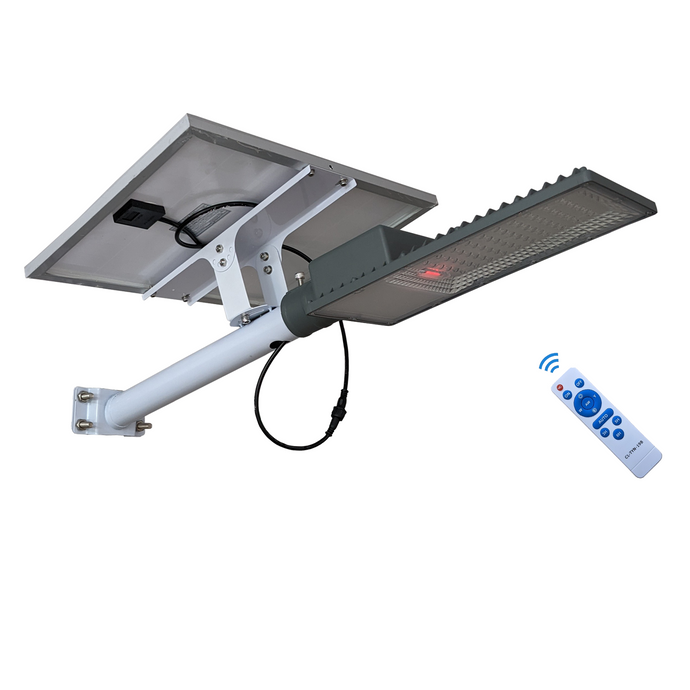

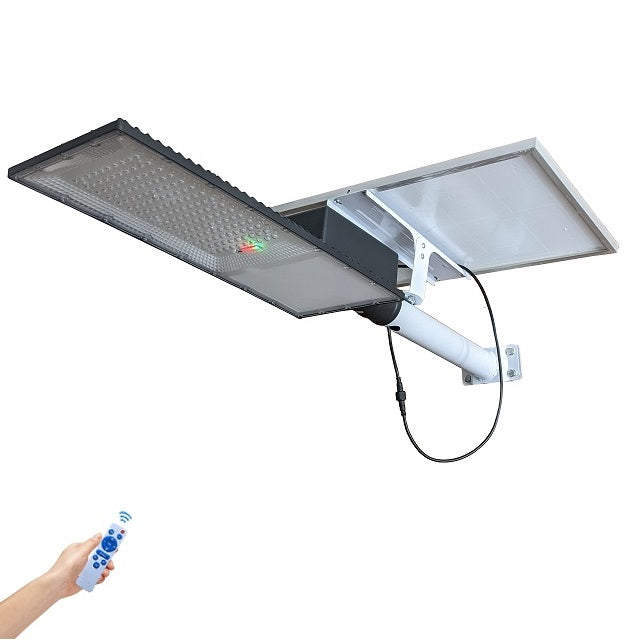


Solar Street Lights — All-in-One & Integrated, Built for India
Looking for the best solar street light for your home, gate, road or commercial project? Tapetum offers high-performance, automatic solar street lights designed to withstand Indian weather. Our range includes All-in-One and Semi-Integrated models with intelligent motion sensors and long-lasting LiFePO4 batteries. Every light works from dusk to dawn on its own, needs no wiring, and runs on zero electricity — backed by warranty. See the full solar street light price list below.

Solar Street Light Price List (India)
Prices below are for the light and accessories, without poles, including all expenses. Solar street light price starts at ₹4,499.
All-in-One Solar Street Light — all components built into a single compact unit.
| Model | Price (₹) | Warranty |
|---|---|---|
| Solar Owl Street Light 100 Watt | 4,499 | 1 Year |
Semi-Integrated Solar Street Light — battery, fixture, luminary and controller in one unit, with a separate solar panel.
| Model | Price (₹) | Warranty |
|---|---|---|
| Solar Bat Street Light 40 Watt | 6,999 | 1 Year |
| Solar Bat Street Light 75 Watt | 9,000 | 2 Year |
| Solar Bat Street Light 90 Watt | 11,500 | 2 Year |
| Solar Bat Street Light 150 Watt | 14,499 | 2 Year |
Types of Solar Street Lights
1. All-in-One Solar Street Light — a compact light with the solar panel, battery, controller and LED housed in a single unit.
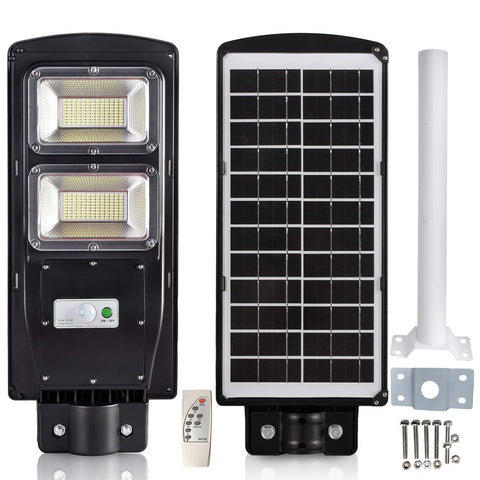
2. Semi-Integrated Solar Street Light — the battery, fixture, luminary and controller are moulded into one unit, while the solar panel mounts separately for better sun positioning.

Features of a Solar Street Light
- Automatic: a dusk-to-dawn sensor turns the light on and off by itself and keeps it running through the night.
- Motion sensor: detects movement and raises brightness, acting as a security light while saving battery the rest of the time.
- Energy saving: runs entirely on solar power and keeps working during power cuts.
- No running cost: no electricity charges, so it saves money over its life.
- No cabling: no trenching or foundation work for wires — saving cost and labour.
- Low maintenance: no manual operation needed after installation.
- Weatherproof: IP65 rated to withstand harsh sun, rain and dust.
What are the parts of a solar street light?
A solar street light has an SPV module, charge controller, battery, luminary, interconnecting cables and a pole.
- Solar (SPV) module: mounted on top of the pole at an angle to catch maximum sunlight; it charges the battery during the day.
- Charge controller (CCU): manages charging, prevents deep discharge and overcharge, and extends battery life.
- Battery: stores the day's energy to power the light at night. LiFePO4 lithium batteries are now standard — compact and housed inside the luminary itself.
- Luminary: the LED lamp that provides illumination, with the controller and battery built in.
- Interconnecting cables: connect the module, luminary, controller and battery.
- Pole: an MS or GI pole that holds the module and luminary 4–5 metres above ground.
How does a solar street light work?
Solar street lights work on the photovoltaic effect. During the day the solar panel converts sunlight into electricity, which is stored in the battery via the charge controller. At night the light draws on that stored energy and illuminates automatically from dusk to dawn. They charge even on cloudy days and in partial shade, though direct sunlight gives the best performance.
Battery types used in solar street lights

Three battery types are used: lead-acid, lithium-ion (Li-ion) and lithium iron phosphate (LiFePO4). LiFePO4 recharges faster, offers 4–5× more charge cycles than Li-ion and lasts far longer than lead-acid, while staying compact and light. Lead-acid is cheaper but needs regular maintenance and has a shorter life. Tapetum uses LiFePO4 for the best lifespan and lowest maintenance.
Light source used in solar street lights
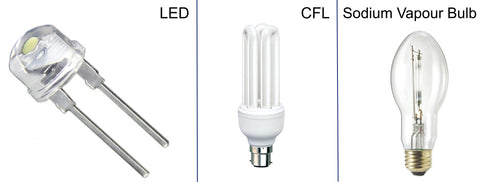
LED, CFL and sodium-vapour sources are all used, but LED is the most common because it gives higher brightness at lower power consumption, with a long life and less heat.
Lighting fixtures

Cobra-head housings are the most common. Modern LED designs are lighter and more decorative, built from durable ABS plastic or aluminium.
Charge controllers (PWM & MPPT)

A PWM controller drops the panel voltage to match the battery; an MPPT controller runs the panel at its maximum power point to generate more power. MPPT costs more but produces more from the same number of panels.
Solar panel types

Solar street lights use either mono-crystalline panels (pure silicon, higher efficiency) or poly-crystalline panels (more economical and widely used).
MNRE standards for solar street lights
The Ministry of New and Renewable Energy (MNRE) defines four models of White-LED solar street lighting systems, differing by battery type (lead-acid or LiFePO4) and operation (full-brightness dusk-to-dawn, or motion-sensor dimming). MNRE also specifies PV modules tested to IEC 61215 / BIS 14286 from NABL- or IECQ-accredited labs, with minimum electronic efficiency of 85–90% and defined warranty and maintenance requirements. Buying to MNRE standards ensures tested quality for government and commercial projects.
How to install a solar street light
Choose flat, level ground in a shadow-free spot with direct daytime sunlight. A complete kit includes the panel, fixture, pole, battery and controller. Fix the LED and panel to the pole while it is on the ground, set the panel angle for maximum sun, then raise and secure the pole firmly — it must resist wind load. Follow the manufacturer's instructions for anchoring.
Maintenance of solar street lights
Maintenance is minimal. Keep the panel clean — wipe off dust with a soft brush or cloth and mild soap, or hose it down, taking care not to scratch the glass. Trim any branches that shade the panel, and periodically check the wiring and fixture for damage from weather or wildlife. The IP65 housing and tilted panel handle rain on their own.
Solar Street Lights — FAQ
How does a motion sensor light work?
Motion sensors detect movement in their field of view and brighten the light. They cut energy use and extend battery life by dimming when there is no movement.
How does dimming work?
Dimming saves energy and extends the LED's life. Some lights auto-dim based on battery level; others use the motion sensor to go full brightness on movement, then dim down again.
Do solar street lights work during the monsoon?
Yes. Panels generate less on rainy, overcast days, so brightness may reduce, but the lights keep working — many run for several days on a good charge.
What is the lifespan of a solar street light?
Solar panels typically last 25 years or more. LEDs are rated up to 50,000 hours. A LiFePO4 or lithium-ion battery lasts 5+ years with very low maintenance; lead-acid lasts about 3–5 years.
How much area does a solar street light cover?
It depends on wattage and lumens. As a guide, a 30 watt solar street light covers roughly a 20–25 metre area.
What pole height should I use?
It depends on the location, but a 4–5 metre pole is typical for street lighting.
How do I choose the right solar street light?
Match wattage and lumens to your area and purpose (path, security or decorative). Consider whether you need a motion sensor, the operating hours you require, the battery type, and the daily sunlight your site receives. Choosing a tested brand helps you get the right fit.
Do solar street lights work all night?
Yes, provided the panel received enough sunlight to fully charge the battery during the day.
Should I charge a solar street light before installing it?
Yes. Since these lights are mounted high on poles or walls, charge the panel in direct sunlight for a full day first so you can confirm it works before fixing it in place.
Do solar street lights charge in winter?
Yes. Panels absorb light, not heat, and actually run efficiently in cooler temperatures. Clean off any fog or frost occasionally.
Can I use a normal battery in a solar street light?
No. Each controller is programmed for a specific battery; a voltage mismatch can damage the controller.
What LED colour is used?
Cool white is the most common colour temperature for street lighting.
What is an automatic solar street light?
It senses nightfall and daybreak and works on its own from dusk to dawn, with no manual switching needed.